
Choosing to repaint your home is a significant investment in its beauty and long-term value. However, the process of finding the right team can feel daunting. The fear of hiring an unreliable crew, ending up with a poor-quality finish that peels within a year, or facing unexpected costs can quickly turn an exciting project into a source of stress.
That’s why selecting professional exterior painters is about more than just comparing quotes; it’s about entrusting your most valuable asset to a team with proven expertise and a commitment to quality. Making the right choice ensures your investment is protected and the final result enhances your home’s curb appeal for years to come.
To give you complete peace of mind, we’ve created this ultimate checklist. Consider it your expert guide to confidently vetting contractors, asking the right questions, and understanding what separates a standard job from a superb one. Follow along to find a trustworthy team and achieve a flawless, durable finish that you will be proud of.
Step 1: Preparing Your Home for a Professional Paint Job
Before you begin your search for the best local painters, a small amount of homework provides a powerful head start. This initial preparation is the key to receiving more accurate quotes, setting clear expectations, and communicating your vision effectively with potential contractors. Investing this time upfront ensures a smoother process and helps you find expert exterior painters who can truly deliver on your goals. A well-defined project scope is the foundation of a successful and stress-free painting experience.
Define Your Project Scope
To receive a tailored and precise quote, you must first clearly outline exactly what you want painted. Being specific from the outset prevents misunderstandings and ensures all parties are aligned on the work required. We recommend creating a simple checklist for your property:
- Primary Surfaces: Note all external walls, eaves, gables, and trim.
- Detailed Features: Decide if you need window frames, doors, gutters, and fascias included.
- Additional Structures: List any separate items like decks, pergolas, fences, or carports.
- Colour Direction: Think about general colour families you prefer, such as light neutrals, dark modern tones, or classic whites.
Conduct a Thorough Visual Inspection
Walk around the exterior of your property with a critical eye. Documenting the current condition of your home is vital, as it directly impacts the level of preparation required for a quality finish. Look closely for issues like peeling or flaking paint, cracks in render or weatherboards, signs of mould, and any rotten timber. Taking photographs of these problem areas will be invaluable when discussing the job, as meticulous surface preparation is one of the core duties of a house painter and a critical factor in a durable result.
Set a Realistic Budget and Timeline
A professional exterior paint job is a significant investment in your property’s protection and aesthetic value. Researching average painting costs in your local Australian area will help you establish a realistic budget (often priced per square metre or as a fixed project cost). Remember that quality workmanship adds measurable value and appeal to your home. Finally, consider your ideal timeline for completion, but be prepared to remain flexible to accommodate potential weather delays, a common factor for any outdoor trade work.
Step 2: Finding and Vetting Potential Exterior Painters
With your project goals defined, it’s time to create a shortlist of reputable painting contractors. The key to a successful outcome is to gather names from several reliable sources rather than relying on a single search. Your objective is to identify three to four qualified and professional painters who you can invite to provide a detailed quote. Investing time in proper vetting at this stage is the single best way to avoid costly mistakes and ensure you receive quality, lasting results for your home.
Where to Find Reputable Local Painters
A great painter often relies on their reputation. Begin your search by casting a wide net across both personal recommendations and professional platforms. A balanced approach will give you the most comprehensive list of candidates.
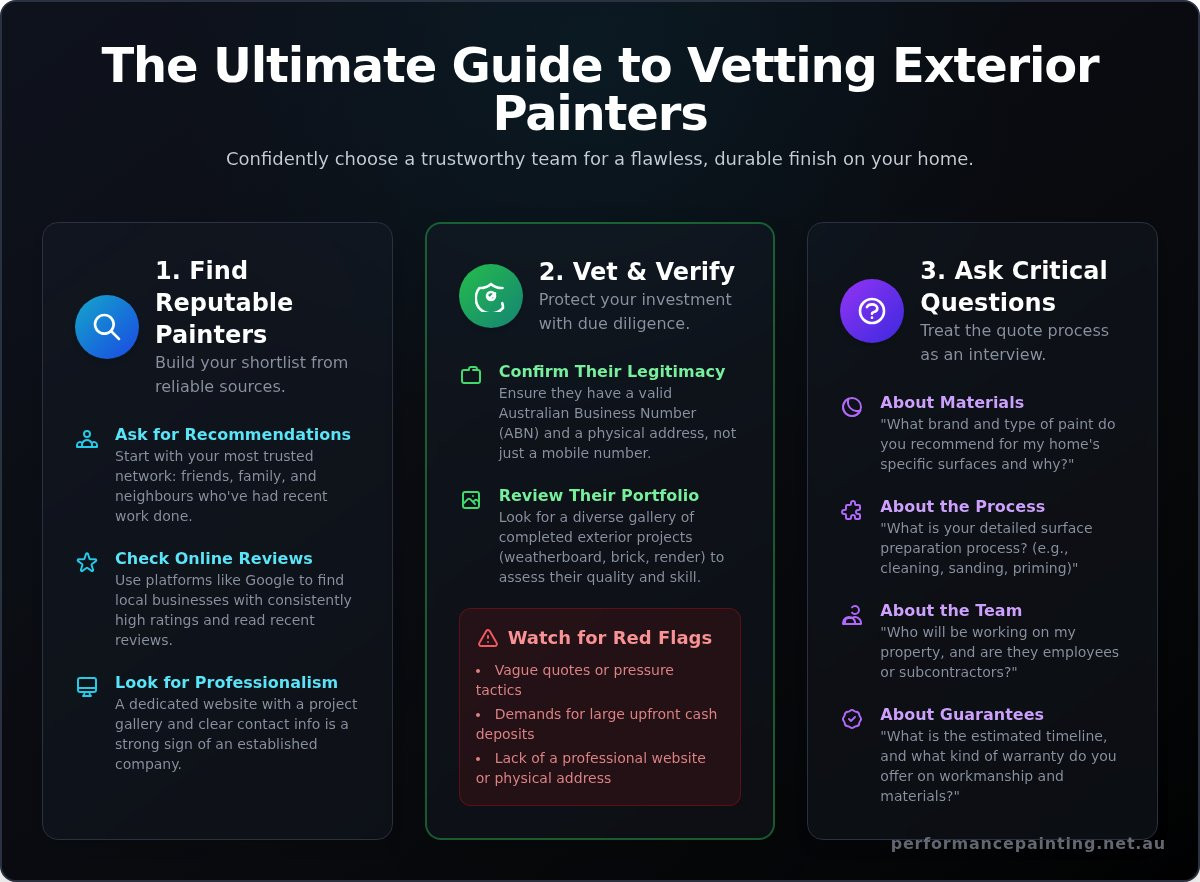
- Ask for Recommendations: Start with your most trusted network-friends, family, and neighbours who have recently had their homes painted. A first-hand referral is often the most reliable indicator of quality service.
- Check Online Reviews: Use platforms like Google Maps to find local businesses with consistently high ratings. Read through recent reviews to understand other homeowners’ experiences.
- Look for Professionalism: A dedicated business website with a gallery of work, clear contact information, and professional branding is a strong sign of an established and serious company.
Essential Background Checks and Red Flags
Once you have a few names, perform some essential due diligence to verify their legitimacy. This simple step protects your investment and provides peace of mind. Confirm that the business has a valid Australian Business Number (ABN) and a physical address, which shows they are an established local entity. Performing these simple checks is crucial for your protection; for a deeper dive, government bodies often provide detailed consumer protection tips for hiring contractors that cover licensing and avoiding common scams. Be cautious of red flags like a contractor who only provides a mobile number or anyone demanding a large cash deposit upfront-a professional business will have a clear, fair payment structure.
Review Their Portfolio and Past Work
A portfolio is a direct reflection of a painter’s skill and experience. Look for a comprehensive gallery on their website that showcases a variety of completed exterior projects. Assess whether the quality and style of their work align with your expectations for your own home. Does their portfolio demonstrate expertise with different materials, such as weatherboard, brick, or render? If you have a brick home and are considering a modern update, understanding the full process of painting a brick house can help you ask more informed questions during this review. A strong collection of past work, supported by positive testimonials on independent review sites, is one of the best indicators you’ve found a team of expert exterior painters capable of enhancing your property’s value and appeal.
Step 3: The Quoting Process – Critical Questions to Ask
The on-site consultation is much more than a simple price check; it’s your opportunity to interview potential contractors. How they answer your questions reveals their professionalism, process, and level of expertise. Use this meeting to assess their communication skills and attention to detail. A true professional will welcome your questions, viewing them as a sign of a diligent homeowner who values quality work. Don’t hesitate to dig into the specifics-the details you gather now are crucial for making a confident decision.
Questions About Their Process and Materials
Understanding a painter’s methodology is key to knowing what you’re paying for. The quality of the final finish is directly tied to the preparation and products used. Ask these questions to gauge their commitment to a durable, high-quality result.
- What brand and type of paint do you recommend for my home and why? A detailed answer shows product knowledge and a tailored approach.
- Can you describe your surface preparation process? This should include washing, scraping, sanding, and patching-the most critical stage for a long-lasting paint job.
- How many coats of primer and topcoat are included in the quote? The standard for quality is typically one coat of primer and two topcoats.
- How will you protect my garden, paths, windows, and non-painted surfaces? Look for a clear plan involving drop sheets, plastic, and painter’s tape.
Questions About Their Team and Credentials
The people working on your property and their credentials are just as important as the paint they use. These questions help ensure you are hiring reputable and responsible exterior painters who are properly insured and operate safely.
- Are the painters who will be on-site your employees or subcontractors? This affects accountability and consistency.
- Can you provide proof of current Public Liability Insurance? This is non-negotiable and protects you from liability for accidents or property damage; professional tradespeople often work with brokers like AllCover Insurance Brokers to ensure they have the correct coverage.
- What is your policy for workplace health and safety (WHS)? A professional firm will have established safety protocols.
- Who will be my main point of contact throughout the project? Clear communication relies on having a designated project manager or site foreman.
Questions About Timelines and Logistics
Practical and logistical details determine how smoothly the project will run and how much it will impact your daily life. A well-organised team will have clear answers for these everyday operational concerns.
- What is the estimated start date and total project duration?
- How do you manage and communicate unavoidable weather delays?
- What are your typical daily start and finish times?
- What does the daily clean-up process involve? A professional crew leaves the site tidy and secure at the end of each day.
Step 4: Decoding the Quote – How to Compare Apples with Apples
You’ve gathered several quotes from local exterior painters, but the work has just begun. While it’s tempting to simply choose the lowest price, the cheapest quote rarely represents the best long-term value for your home. A quote is more than a number; it’s a direct reflection of a contractor’s professionalism and process. A verbal estimate or a single figure scribbled on a card is a major red flag. A true professional will always provide a detailed, written document that leaves no room for ambiguity.
What a Professional Written Quote Must Include
A comprehensive quote protects you as the homeowner by setting clear expectations from the outset. It demonstrates transparency and provides a clear benchmark for comparing different offers. Look for a document that clearly lists the following:
- The company’s full business name, contact information, and ABN.
- A detailed description of the scope of work, listing every wall, trim, and feature to be painted.
- A clear breakdown of costs, separating labour from materials.
- The specific brands and product lines of paint to be used (e.g., Dulux Weathershield) and the number of coats to be applied to each surface.
Comparing Surface Preparation Details
This is arguably the most important section of any quote. Vague terms like ‘prepare surfaces’ are insufficient and can hide shortcuts. A quality quote will explicitly detail the preparation process, such as high-pressure washing, scraping and sanding all flaking paint, filling cracks, and spot-priming bare timber. Proper surface preparation can account for up to 70% of the total work and is the single most critical factor in achieving a durable, flawless finish that lasts for years. This is especially true when painting a brick house exterior, where thorough preparation is essential to prevent moisture issues and ensure the paint bonds correctly to the surface.
Understanding Warranties and Guarantees
A workmanship warranty is a testament to a painter’s confidence in their own skills and materials. Always ask what kind of guarantee they offer and ensure you receive it in writing. A professional painter will be able to clearly explain what is covered (such as peeling or blistering due to poor application) and what is not. A company that stands proudly behind its work provides you with essential peace of mind for your significant investment. When you hire expert exterior painters, you should expect nothing less.
By thoroughly analysing each quote for these crucial details, you can make an informed decision based on true value, not just the bottom-line price. Ready to see what a truly professional quote looks like? Get a detailed, transparent quote from our experts.
Step 5: Making the Final Decision and Signing the Contract
You have diligently researched, asked insightful questions, and compared detailed quotes from several potential candidates. Now, you are at the final, crucial stage of hiring your exterior painters: making a decision and formalising the agreement. A professional, written contract is not just a formality; it is an essential document that protects both you and your painting contractor, ensuring complete clarity and peace of mind before the first brushstroke is applied.
Key Elements of a Painting Contract
A trustworthy contractor will always provide a comprehensive written agreement. This document should be clear, detailed, and leave no room for ambiguity. Before signing, ensure it contains the following critical components:
- Detailed Scope of Work: The contract must reference the initial quote, explicitly listing all surfaces to be prepared and painted, the specific brands and types of paint to be used, and the number of coats to be applied.
- Total Price and Payment Schedule: It should state the total fixed price in Australian Dollars (AUD) and outline a clear payment schedule. A standard practice is a small initial deposit, followed by progress payments and a final payment upon satisfactory completion.
- Project Timeline: Look for a specified start date and an estimated completion date. Professional painters will also note that timelines can be subject to weather delays, which is a realistic and important detail for exterior work.
- Process for Changes: The contract should define a clear process for handling any changes or additional work. This is often called a "change order," which details the new work and associated costs, requiring your approval before proceeding.
Confirming the Final Details
With the contract in hand, take a moment for one last review to ensure every detail aligns with your expectations. This final check prevents misunderstandings and helps your project run smoothly from day one.
- Finalise Colour Choices: Ensure your final colour selections, including the specific paint codes and finishes (e.g., low sheen, gloss), are documented in the contract.
- Confirm Access Arrangements: Discuss and confirm how the team will access your property, including gates, water, and power. Inform them about any pets or specific site considerations.
- Read Carefully Before Signing: Take the time to read the entire document. If there is anything you don’t understand, ask for clarification. A reputable contractor will be happy to explain any clause.
- Keep a Signed Copy: Once you have signed, ensure you receive a copy for your records. This document is your reference point for the entire project.
By finalising a detailed contract, you are setting your project up for success. This professional approach is the hallmark of reliable exterior painters and guarantees the quality finish and lasting value you expect for your home. If you’re ready for a premium result backed by transparent, professional service, we invite you to book an obligation-free consultation with the experts at Performance Painting.
Your Partner for a Perfect Home Exterior
Choosing the right exterior painters is one of the most important decisions you’ll make for your home’s value and kerb appeal. By following this guide-from asking the right questions to comparing quotes apples-with-apples-you are now equipped to make a confident choice. This diligence ensures you invest in a quality finish that not only looks beautiful but provides lasting protection for your property.
For over 30 years, Performance Painting has been that trusted choice for homeowners across Hobart. Our commitment to a detailed, transparent quoting process and expert craftsmanship removes the guesswork, giving you complete peace of mind. We even offer expert colour consultations to help you find the perfect look. We take pride in our work so you can take pride in your home.
Ready for a flawless finish? Book your obligation-free quote with Performance Painting today.
Frequently Asked Questions
How long should a professional exterior paint job last in Australia?
A quality exterior paint job in Australia should last between 7 and 15 years. The longevity depends heavily on the quality of the paint used, the thoroughness of the surface preparation, and exposure to harsh weather conditions like intense sun or coastal salt spray. Professional painters ensure every step is completed to the highest standard, from preparation to the final coat, maximising the lifespan of the finish and protecting the value of your property for years to come.
What is the best time of year to paint a house exterior in Hobart?
The ideal time to paint an exterior in Hobart is during the warmer, drier months, typically from late spring through to early autumn. Paint requires mild temperatures and low humidity to cure correctly, ensuring a durable and long-lasting finish. We generally recommend scheduling your project between November and March to avoid the cold, damp conditions of a Hobart winter, which can compromise the quality and longevity of the paintwork and lead to costly issues down the line.
How do professional painters deal with lead-based paint?
Professional painters handle lead-based paint with extreme care, following strict safety regulations to protect both your family and our team. The process involves containing the work area, using specialised equipment, and employing safe removal techniques like wet scraping to minimise dust. All lead-contaminated waste is then disposed of according to government guidelines. It is crucial to hire experienced professionals who are trained in lead-safe practices to manage this hazardous material correctly and ensure a safe outcome.
Do I need to be home while the painters are working?
You do not typically need to be home while our team is working on your property’s exterior. We only require safe access to the outside of your house, including any water taps and power points. Our professional crew is fully insured, trustworthy, and respectful of your property. We maintain clear communication throughout the project, providing you with daily updates so you are always informed of our progress, allowing you to carry on with your day with complete peace of mind.
How much does it cost to hire exterior painters?
The cost to hire professional exterior painters in Australia can vary significantly based on your home’s size, condition, and accessibility. A single-storey home might range from A$5,000 to A$10,000, while a larger, multi-storey house could cost A$12,000 to A$25,000 or more. Factors like extensive surface preparation, detailed architectural features, and the quality of paint selected all influence the final price. We provide a detailed, itemised quote to ensure full transparency and value for your investment.
What’s the difference between a quote and an estimate?
An estimate is a rough approximation or ballpark figure of the potential cost, which can change as the project scope becomes clearer. A quote, however, is a formal, fixed-price offer. Once you accept a quote, it becomes a binding agreement for the specific work detailed within it. We always provide comprehensive, obligation-free quotes that clearly outline all costs, labour, and materials, so you know the exact investment required before any work begins, ensuring there are no surprises.