
Considering a modern update for your home’s exterior, but hesitant about the commitment of painting over classic brick? You’re not alone. Many homeowners worry about the potential risks: Will it trap moisture and cause long-term damage? Will the paint peel and bubble, creating a maintenance nightmare? These are critical questions, and the decision to paint brick is a significant one that should be made with complete confidence.
The good news is that a professional approach to painting a brick house can deliver a stunning, durable transformation. In this complete guide, we demystify the process for you. We’ll explore the real pros and cons, outline the essential preparation steps for a flawless result, and provide the expert knowledge you need to achieve a beautiful finish that lasts. Discover how to enhance your property’s kerb appeal and increase its value, all while avoiding the common pitfalls that concern homeowners most.
Key Takeaways
- Painting brick is a permanent choice that can significantly boost your home’s modern appeal and market value.
- The biggest risk is trapped moisture; learn why specialised breathable paints are non-negotiable for a healthy, lasting finish.
- A successful project for painting brick house exteriors is almost entirely dependent on meticulous preparation-skipping steps guarantees a poor result.
- Understand the key differences between a DIY attempt and a professional service to avoid costly mistakes and ensure a flawless outcome.
The Big Debate: Should You Paint Your Brick House?
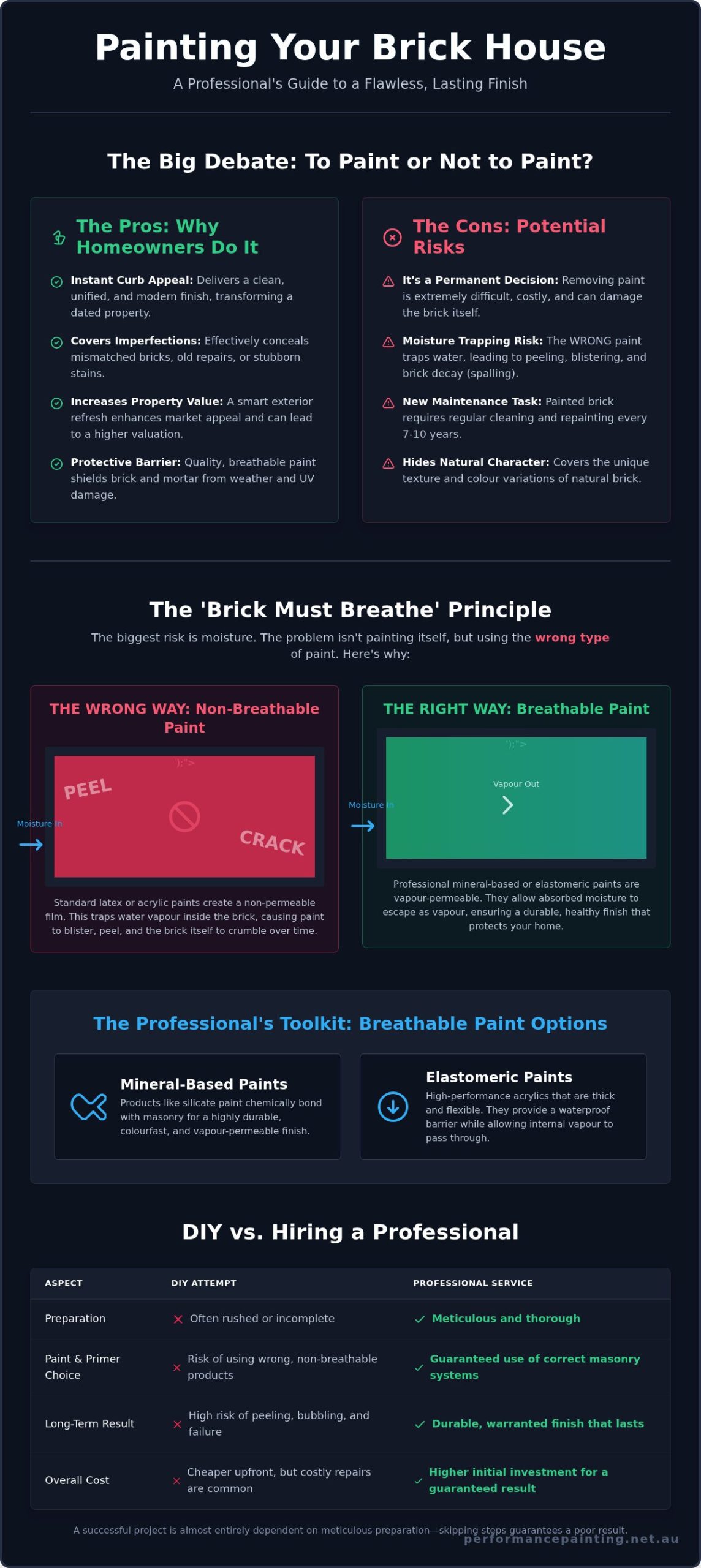
Deciding on painting a brick house is one of the most significant aesthetic choices a homeowner can make. It’s a powerful way to modernise a dated exterior, create a cohesive look, and dramatically boost your home’s street appeal. However, this is not a decision to be taken lightly. Once brick is painted, it’s a permanent commitment with long-term implications for maintenance and the health of your brickwork.
To help you make a confident and informed choice, we’ve broken down the key factors you need to consider. This video provides an excellent visual guide to the process and the potential results:
The Pros: Why Homeowners Choose to Paint Brick
A professional paint job can offer a range of compelling benefits that enhance both the look and value of your property.
- Instant Curb Appeal: A fresh coat of paint delivers a clean, unified, and modern finish. It can completely transform your property’s aesthetic from tired and dated to sharp and contemporary.
- Covers Imperfections: Painting effectively conceals cosmetic issues such as mismatched bricks from previous repairs, uneven colouring, or stubborn stains that detract from your home’s appearance.
- Increases Property Value: A smart exterior refresh is a proven way to enhance market appeal. A beautifully painted brick home often stands out and can contribute to a higher valuation in the Australian property market.
- Protective Barrier: When applied correctly by professionals using a quality, breathable paint, it adds a layer of protection, shielding the brick and mortar from harsh weather and UV damage.
The Cons: Potential Risks and Considerations
While the visual rewards are high, it’s essential to understand the potential downsides and long-term commitments before you proceed.
- It’s a Permanent Decision: Removing paint from brick is an extremely difficult, labour-intensive, and costly process that can damage the brick surface. For all practical purposes, consider it a one-way decision.
- Moisture Trapping Risk: Bricks are porous and need to breathe to release absorbed moisture. Using the wrong type of paint can trap water inside, leading to blistering, peeling, and spalling-where the brick face crumbles. Understanding the properties of brick as a material is crucial to avoiding this costly damage.
- New Maintenance Task: Unlike raw brick, a painted surface introduces a new maintenance schedule. It will require regular cleaning and must be repainted every 7-10 years to maintain its integrity and appearance.
- Hides Natural Character: Part of the charm of a brick home is its unique texture and colour variations. Painting covers these features, creating a uniform appearance that may not appeal to everyone.
The ‘Brick Must Breathe’ Myth: Choosing the Right Paint is Crucial
One of the most common concerns homeowners have about painting a brick house is the fear of trapping moisture. This is a valid concern, but it stems from a misunderstanding. The issue isn’t the act of painting itself, but the type of paint used. Standard exterior latex or acrylic paints can create a non-permeable film over the brick. Because brick is porous, it needs to release any absorbed water vapour. When this vapour is trapped by the wrong paint, it can lead to significant problems, including blistering, peeling, and even long-term decay of the brick and mortar itself.
The solution is not to abandon the idea of a beautiful, painted brick finish. The key is to use professional-grade products specifically designed for masonry, allowing the brick to “breathe” as intended. This expert approach ensures a durable, high-quality finish that protects your home instead of harming it. For a broader understanding of how product selection and preparation affect all types of exterior surfaces, our complete guide to exterior house painting covers the full process in detail.
Breathable Paints: The Professional’s Choice
To achieve a lasting result, professional painters use specialised coatings that work with your brickwork, not against it. These fall into two main categories:
- Mineral-based Paints: Products like silicate paint or traditional limewash don’t just sit on the surface; they chemically bond with the masonry. This creates a highly durable, colourfast finish that is inherently vapour-permeable, allowing moisture to escape freely.
- Elastomeric Paints: These are high-performance acrylic paints formulated to be thicker and more flexible than standard paint. They provide an excellent waterproof barrier against rain while still allowing internal water vapour to pass through, offering a modern and highly protective solution.
Primers and Sealers for Masonry
A quality finish is built on a quality foundation. Before any colour is applied, using a specialised masonry primer is an essential first step. This isn’t just a recommendation; it’s crucial for the longevity of the project. A proper masonry primer neutralises the natural alkalinity of the brick and mortar, which can otherwise break down the paint over time. This preparation, a non-negotiable part of any professional painting process, ensures superior adhesion, prevents blotchiness, and guarantees a uniform, durable finish that adds lasting value to your property.
The Professional Process: How to Paint Brick for a Lasting Finish
A successful painted brick project is 90% preparation. When you see painted brick that is peeling, bubbling, or flaking, it is almost always a result of shortcuts taken during the crucial preparation phase. At Performance Painting, we understand that a meticulous, step-by-step approach is the only way to guarantee a beautiful finish that protects your home and prevents moisture-related issues. Following industry best practices, like those found in the Brick Industry Association guide to painting brick, is non-negotiable for a quality outcome. This detailed process is the key to longevity when painting a brick house.
Step 1: Thorough Inspection and Cleaning
The first step is a comprehensive assessment and deep cleaning of the entire surface. We begin by inspecting every mortar joint for signs of cracking or crumbling, as these structural issues must be addressed before any paint is applied. A clean surface is essential for proper paint adhesion.
- Inspect the Surface: We identify any damaged mortar or cracked bricks that require repair.
- Professional Cleaning: The brick is carefully cleaned with a pressure washer to remove all dirt, grime, mildew, and any white, chalky residue known as efflorescence.
- Crucial Drying Time: We ensure the brick is allowed to dry completely, which can take several days. Trapping moisture behind paint is the primary cause of future paint failure.
Step 2: Essential Repairs and Preparation
With a clean and dry surface, we move on to repairs and site preparation. Creating a sound, stable substrate is vital for a durable paint job. This stage ensures the final finish will be smooth, uniform, and free from underlying structural problems.
- Mortar Repairs: Damaged mortar joints are repaired through a professional process called repointing, which restores the integrity of your brickwork.
- Crack Filling: Any cracks in the bricks themselves are filled with a high-quality, flexible masonry filler to create a seamless surface.
- Protect Your Property: All windows, doors, lighting fixtures, and landscaping are meticulously masked off and protected to prevent overspray.
Step 3: Priming and Painting Application
Finally, we apply the coatings using proven techniques and premium materials. The key is to use products designed specifically for masonry that allow the brick to breathe. This prevents moisture from getting trapped, which can cause significant damage over time.
- Apply Masonry Primer: A full coat of high-quality, breathable masonry primer is applied to seal the porous brick and create a strong bond for the topcoats.
- Spray and Back-Roll: We use a professional paint sprayer for an even application, immediately followed by back-rolling. This technique works the paint into the brick’s texture for superior coverage and adhesion.
- Apply Two Topcoats: At least two topcoats of a premium, breathable exterior masonry paint are applied to ensure vibrant colour and long-lasting durability.
This disciplined process is fundamental to a professional result. Our expert exterior painting services ensure every step is completed to the highest standard, delivering a finish that enhances your home’s value and appeal for years to come.
DIY vs. Hiring a Professional for Your Brick House
While the appeal of a weekend project is understandable, painting a brick house is a far more complex undertaking than standard exterior painting. The porous nature of brick, combined with the harsh Australian climate, means the risks of an improper application are significantly higher. A small mistake can lead to trapped moisture, peeling paint, and costly damage to the masonry itself. Before you decide to tackle this job yourself, it’s essential to weigh the costs, challenges, and long-term benefits of a professional finish.
The Challenges of a DIY Approach
Attempting to paint brick without professional experience presents several significant hurdles. The investment in specialised equipment alone can be substantial, and a lack of expertise can quickly turn a cost-saving project into a future liability. Key challenges include:
- Specialised Equipment Costs: Hiring or purchasing a high-powered pressure washer and an industrial-grade paint sprayer is necessary for proper preparation and application, adding unexpected costs to your budget.
- Masonry Assessment: An untrained eye can easily miss subtle signs of efflorescence, mortar decay, or cracks that must be professionally repaired before any primer is applied.
- Risk of Incorrect Products: Using standard acrylic exterior paint can trap moisture inside the brick, causing it to degrade, flake, and spall over time. This is one of the most damaging mistakes a DIY painter can make.
- Safety Concerns: Working safely at heights on ladders or scaffolding requires training and proper equipment, posing a serious risk for the inexperienced homeowner.
The Value of a Professional Painter
Engaging an expert team like Performance Painting transforms the task of painting brick house exteriors from a risk into a sound investment. A professional painter provides peace of mind and delivers a superior result that protects and enhances your property’s value. They bring expert knowledge of the correct breathable primers and durable paints formulated specifically for masonry, ensuring your home can properly expel moisture.
Meticulous surface preparation is the cornerstone of a quality finish, and professionals have the tools and experience to guarantee a long-lasting bond between the paint and the brick. This expertise results in an efficient process and a flawless, even finish that DIY methods simply cannot replicate, boosting your home’s kerb appeal for years to come. To understand everything involved in a professional exterior project — from colour selection to final coats — explore our comprehensive house painting guide for Australian homeowners.
Ready for a perfect finish? Book an obligation-free appointment with our Hobart team to discuss how we can expertly transform your home.
Achieve a Flawless Finish for Your Brick Home
Transforming your home’s exterior is a significant decision. As we’ve explored, the key to a beautiful and durable result lies not in avoiding paint, but in choosing the right breathable products and understanding that meticulous surface preparation is non-negotiable. While a DIY approach is tempting, the complexity of painting a brick house correctly makes professional expertise the most valuable investment for protecting your property’s integrity and value.
For a guaranteed long-lasting, professional finish, trust the specialists at Performance Painting. With over 30 years of experience serving Hobart and surrounds, we are experts in quality surface preparation and flawless application. We ensure your home not only looks stunning but is also properly protected for years to come.
Ready to enhance your home’s appeal and create a look you truly love? Get a Free, No-Obligation Quote for Your Brick House Painting Project and let our experienced team provide a tailored solution for you.
Frequently Asked Questions About Painting Brick Homes
How much does it cost to paint a brick house in Australia?
The cost for professionally painting a brick house in Australia typically ranges from A$45 to A$65 per square metre. This price varies based on factors like the home’s size, number of storeys, and the extent of surface preparation required. The quality of the paint and primer selected also influences the final quote. For an accurate, tailored estimate that reflects your property’s specific needs, we recommend an obligation-free consultation with an expert team.
How long does painted brick last before it needs repainting?
A high-quality, professional paint job on an exterior brick surface should last between 7 and 10 years. The longevity of the finish depends heavily on proper surface preparation, the use of premium, breathable paints, and local climate conditions. Meticulous cleaning and priming are essential first steps to ensure the paint adheres correctly and withstands the elements, protecting your investment and maintaining your home’s appeal for years to come.
Can you paint a brick house that has already been painted?
Yes, it is certainly possible to repaint a previously painted brick house. The key to a successful and long-lasting result is meticulous surface preparation. Our professional process involves thoroughly cleaning the surface and addressing any failing paint by scraping and sanding away loose or peeling areas. This ensures the new coats of paint have a stable, sound surface to adhere to, resulting in a smooth, durable, and beautiful finish that revitalises your home’s exterior.
Does painting a brick house decrease its value?
On the contrary, a professionally painted brick house almost always increases its value and street appeal. A modern colour scheme can instantly update a dated exterior, making the property more attractive to potential buyers. A quality paint job also adds a layer of protection against moisture and the elements. Viewing this project as an investment in your home’s aesthetic and durability is key to enhancing its overall market position and salability.
What are the most popular colours for painted brick homes in 2025?
In 2025, the trend for painted brick homes in Australia leans towards sophisticated and natural palettes. Warm, soft whites like Dulux Natural White® remain a timeless choice for a fresh, clean look. Earthy tones, including greiges and muted greens, are also gaining popularity for their ability to connect the home with its landscape. For a bold, contemporary statement, deep charcoals and near-blacks such as Colorbond® Monument® are increasingly popular choices.
Is it better to paint or stain exterior brick?
The choice between painting and staining depends on your desired aesthetic and maintenance goals. Painting provides a solid, opaque colour that can completely transform your home’s look and offers excellent protection. Staining, on the other hand, is semi-transparent and soaks into the brick, colouring it while allowing the natural texture to show through. While staining can be very beautiful, paint generally offers a more durable and protective surface layer against the elements.