
Watching the paint on your beautiful brick home peel, chalk, or fade can be disheartening. This frustration is often compounded by valid concerns: Will a new coat trap moisture and damage the brick? How do you properly prepare a surface that’s already painted? The decision to repaint a brick house is a significant investment in your property’s value and appeal, and it’s essential to get it right the first time.
For more severe surface damage like spalling, simply repainting isn’t enough. In these situations, applying a professional render can be a superior solution, creating a new, durable exterior. For homeowners in Australia exploring this option, specialists like Adam Pro provide expert rendering services that restore the wall’s integrity and prepare it for a flawless finish.
This comprehensive guide is here to provide the professional clarity and confidence you need. We will walk you through the entire process, from expert surface preparation techniques to choosing the correct, high-quality paint that allows your brick to breathe. By following these essential steps, you can achieve a flawless, long-lasting finish that protects your home and dramatically enhances its curb appeal for years to come.
Is It Time to Repaint? Key Signs Your Painted Brick Needs Attention
Deciding to repaint your brick house is a significant investment in your property’s value and appeal. While a desire for a fresh, modern colour is a perfectly valid reason, it’s crucial to first assess the condition of your existing paintwork. Identifying the underlying reasons for deterioration is the first professional step toward a quality finish that lasts. A simple coat of paint over a failing surface will only lead to the same problems reappearing sooner than expected.
Use this checklist to determine whether your home needs attention for cosmetic reasons or due to more serious issues with the paint or the brick itself.
Signs of Paint Deterioration
These are common indicators that the paint film itself is breaking down and losing its protective qualities:
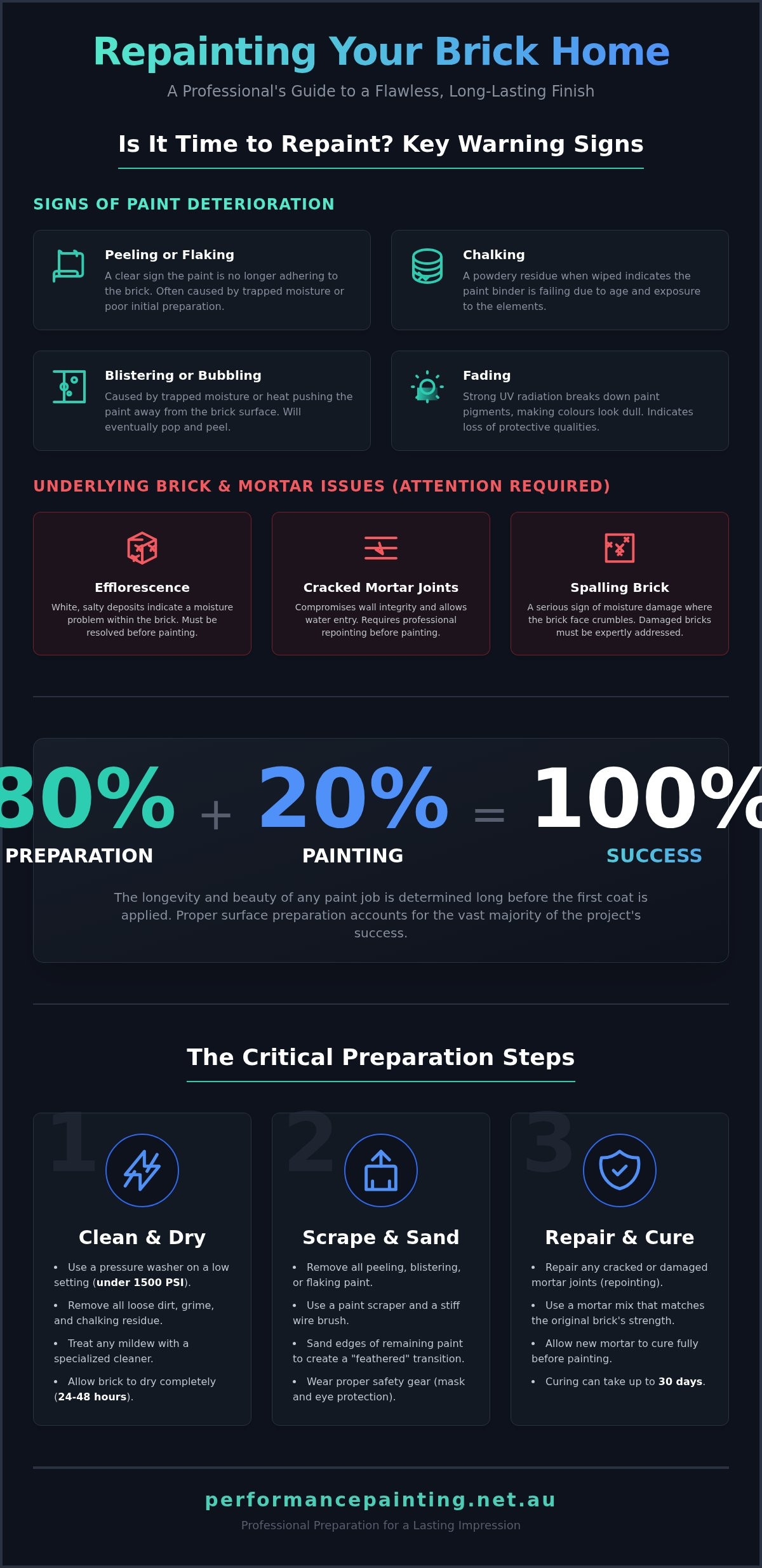
- Peeling or Flaking: This clearly shows the paint is no longer adhering to the brick. It’s often caused by moisture getting behind the paint or inadequate surface preparation during the last paint job.
- Chalking: If you wipe your hand across the surface and it comes away with a fine, powdery residue, the paint binder is failing. This is a natural part of the ageing process, accelerated by exposure to the elements.
- Blistering or Bubbling: These bubbles are typically a sign of trapped moisture or heat. As water vapour or air expands, it pushes the paint away from the brick surface, creating blisters that will eventually pop and peel.
- Fading: Over time, exposure to Australia’s strong UV radiation will break down the pigments in the paint, causing colours to look dull and tired. While primarily an aesthetic issue, it indicates the paint is losing its protective capabilities.
Underlying Issues with the Brick or Mortar
Sometimes, the problem isn’t just the paint-it’s the brickwork beneath. These signs require immediate attention before any new paint is applied:
- Efflorescence: White, salty deposits on the brick surface indicate that water is travelling through the masonry and evaporating, leaving salt behind. This moisture issue must be resolved to prevent new paint from failing.
- Cracked Mortar Joints: Cracks in the mortar compromise the structural integrity of the wall and create entry points for water. These must be professionally repaired, a process known as repointing, before you repaint brick house exteriors.
- Spalling Brick: If the brick face itself is flaking, crumbling, or peeling off, this is a serious sign of moisture damage, often from freeze-thaw cycles. Painting over spalling brick will not fix the problem; the damaged bricks must be addressed by an expert first. A foundational Understanding Masonry helps clarify why moisture management is so critical to the long-term health of brick structures.
Purely Aesthetic Reasons for a Repaint
Of course, not every repaint is prompted by failure. A professional paint job is one of the most effective ways to transform your home’s appearance and boost its value for purely cosmetic reasons, such as:
- Updating an outdated or tired colour scheme to a modern palette.
- Dramatically improving curb appeal and increasing property value before a sale.
- Creating a cohesive look by matching new extensions or renovations to the existing brickwork.
The Critical First Step: Preparing a Previously Painted Brick Surface
At Performance Painting, we operate on a core principle: the longevity and beauty of any paint job is determined long before the first coat is applied. This is especially true when you plan to repaint brick house exteriors. Proper surface preparation accounts for at least 80% of the project’s success, ensuring the new paint adheres correctly and withstands the elements for years to come.
Working over an existing layer of paint presents unique challenges. Unlike fresh brick, you must contend with potential paint failure, hidden moisture, and surface contaminants that can compromise your final result. A simple wash may suffice for a surface in excellent condition, but more often, a detailed approach is required to create a stable foundation for the new paint.
Thorough Cleaning and Mildew Removal
Your first task is a comprehensive clean. Use a pressure washer on a low setting (under 1500 PSI) to gently remove loose dirt, grime, and any powdery residue, known as chalking. Inspect the surface, particularly in shaded or damp areas, for signs of mildew-typically black, grey, or green splotches. Treat these areas with a specialised mould and mildew cleaner or a diluted bleach solution. It is absolutely critical to allow the brick to dry completely, which usually takes 24 to 48 hours, before proceeding.
Dealing with Old, Failing Paint
Any paint that is peeling, blistering, or flaking must be removed. Use a paint scraper and a stiff wire brush to meticulously clear away all loose sections. For a seamless finish, sand the edges of the remaining, well-adhered paint to create a smooth, “feathered” transition. While this is often sufficient, if the old paint is failing extensively or is an improper type (like an oil-based paint that has trapped moisture), complete paint stripping might be the only way to guarantee a quality outcome. Always wear appropriate safety gear, including a dust mask and eye protection, during this stage.
Essential Brick and Mortar Repairs
Painting over cracked mortar is a temporary fix that masks a deeper problem. Water can still penetrate these cracks, leading to further deterioration and causing the new paint to fail from behind. Before painting, you must repair any damaged mortar joints-a process called repointing. Using the correct mortar mix that matches the strength and porosity of your original brick is essential for a durable repair. Once complete, this new mortar must be allowed to cure fully, which can take up to 30 days, before any primer or paint is applied.
Choosing the Right Primer and Paint for a Lasting Finish
After meticulous surface preparation, the success of your project hinges on selecting the right products. Brick is a porous, textured material that requires specific formulations for proper adhesion and long-term durability. When you repaint a brick house, using high-quality materials designed for masonry is not just a recommendation-it’s essential for a finish that withstands the variable Tasmanian climate and adds lasting value to your property.
Primer: The Secret to Adhesion and Durability
Applying a primer is a non-negotiable step for a professional, long-lasting result when you repaint brick house exteriors. It ensures the topcoat of paint adheres uniformly, prevents the porous brick from absorbing too much paint, and blocks stains or old colours from bleeding through. We recommend a high-quality masonry primer, which is specifically formulated to bond securely to both the brick and any existing paint layer, creating the perfect canvas for your new colour. For an even richer finish, tinting the primer towards your final paint colour can significantly improve coverage and depth.
Selecting the Best Exterior Paint for Brick
The most critical factor when choosing paint for a project to repaint brick house walls is breathability. Brick needs to release any moisture that gets absorbed, and the wrong paint can trap it, leading to blistering, peeling, and potential damage to the masonry itself. For this reason, we exclusively use premium, breathable paints.
- 100% Acrylic Latex Paints: These are the industry standard for quality. They are flexible, durable, and allow moisture vapour to escape, preventing damage.
- Elastomeric Paints: Thicker than standard acrylics, these paints are excellent for bridging hairline cracks and providing a superior waterproof yet breathable barrier.
It is crucial to avoid non-breathable, oil-based paints, which can seal the brick and cause long-term problems. In Hobart’s often damp climate, choosing a paint with mildew-resistant additives is also a wise investment for keeping your home’s exterior looking clean and fresh.
Choosing a Sheen and Colour
The paint sheen affects both the final look and the performance of the finish. For most brick homes, lower-sheen options are ideal as they hide the natural imperfections of the surface.
- Matte or Eggshell: These finishes offer a classic, sophisticated look and are excellent at concealing minor flaws in the brick and mortar.
- Satin: A satin finish provides slightly more lustre, which makes it more durable and easier to clean than a matte finish, offering a great balance of aesthetics and practicality.
When selecting a colour, always consider how it will look in natural light throughout the day and how it complements your roof, trim, and landscaping. If you’re finding the decision overwhelming, professional guidance can make all the difference. Get a complimentary colour consultation with our Hobart experts.
The Repainting Process: A Professional Step-by-Step Guide
With all the critical preparation work complete, the application phase is where a quality, long-lasting finish truly comes to life. A professional approach goes beyond simply applying paint; it involves a meticulous, proven process designed for maximum durability and outstanding visual appeal. This is the step that ensures your investment enhances your home’s value for years to come.
Protecting Your Property
Before any paint is applied, our first priority is the complete protection of your property. We meticulously mask all windows, doors, lighting, and architectural trim with high-quality painter’s tape and plastic sheeting. Heavy-duty drop cloths are used to cover paths, driveways, and delicate garden beds, ensuring not a single drop of paint goes astray. This expert preparation guarantees a clean, crisp result and gives you complete peace of mind.
Application Techniques for Brick
To properly repaint a brick house, a multi-step application method delivers the most professional and durable results. We employ a proven combination of techniques to ensure a flawless and resilient coating that bonds perfectly with the textured surface:
- Initial Spray Coat: An airless sprayer is used to apply the first coat of primer or paint. This method efficiently forces the product into the porous brick surface and deep into mortar lines for a complete and uniform seal.
- Expert Back-Rolling: Immediately after spraying a section, we back-roll the entire surface by hand with a thick-nap roller. This crucial step pushes the paint firmly into the brick’s texture, ensuring a superior bond and an even, consistent finish.
- Two Top Coats: We always apply two full top coats of premium-quality paint. This process builds the necessary film thickness for ultimate weather resistance, colour richness, and longevity, adding significant value and protection to your home.
Weather, Curing Times, and Finishing Touches
The final quality of your home’s new look is heavily influenced by environmental conditions. Our expert team will only paint in ideal weather, avoiding high humidity, intense direct sunlight, and rain, which can compromise the finish. Adhering strictly to the manufacturer’s recommended drying times between coats is non-negotiable for proper curing and a lasting bond. Once fully cured, we carefully remove all masking materials and perform a thorough cleanup, leaving you with nothing but a flawless finish.
This meticulous process is key to achieving a finish that not only looks incredible but also stands the test of time. If you’re ready to transform your home with a professional touch, our team is here to provide an obligation-free quote.
DIY vs. Hiring a Professional for Your Brick Repaint Project
Deciding whether to tackle a brick painting project yourself or to engage a professional is a crucial step. While the DIY route can seem cost-effective, a project of this scale requires significant time, specialised equipment, and expertise to achieve a finish that lasts. The right choice often depends on the scope of your project and the current condition of your brickwork.
When to Consider a DIY Approach
A DIY approach can be rewarding for smaller, more manageable tasks. This is a viable option if you are painting a garden wall or a single exterior feature wall, and the existing paint is in good condition with no peeling or flaking. To succeed, you will need the correct tools, including a pressure washer and quality safety equipment, along with a considerable amount of free time for proper preparation and application.
The Advantages of Hiring Performance Painting
When you choose to professionally repaint a brick house, you are investing in a quality, long-lasting result. Our expert team brings value that goes far beyond just applying paint. We provide:
- Expert Diagnosis: We identify and address underlying issues like moisture or efflorescence that cause paint failure, ensuring the new coat adheres properly and endures.
- Professional Equipment: We use commercial-grade preparation tools and airless sprayers for a safe, efficient process and a flawless, uniform finish that’s difficult to achieve with rollers and brushes.
- Superior Materials: We have access to high-performance, trade-quality breathable paints and primers that offer superior durability and protection for your brickwork.
- A Lasting Guarantee: Our work is backed by a comprehensive workmanship guarantee, giving you complete peace of mind in your investment.
What to Expect from a Professional Quote
A reputable and transparent quote is the cornerstone of a professional service. When you contact Performance Painting, we provide a detailed, easy-to-understand proposal that clearly outlines all labour and material costs, the step-by-step preparation and painting process, and includes proof of our full licensing and insurance. We believe an informed client is a confident client. Ready to see the difference a professional can make? Book an obligation-free appointment for a detailed quote today.
Trust the Experts for a Lasting Brick Transformation
Repainting a brick home is a significant project that can dramatically boost your property’s curb appeal and value. As this guide has shown, the secret to a flawless, long-lasting result lies in two critical areas: meticulous surface preparation and the correct choice of primer and paint specifically designed for masonry. Getting these fundamentals right ensures your home is not only beautiful but also properly protected from the elements for years to come.
For homeowners in Hobart seeking a truly professional finish, Performance Painting offers over 30 years of specialised experience. We understand the unique challenges required to properly repaint brick house exteriors. Our process is built on a foundation of expert surface preparation for a finish that lasts, and every project includes a complimentary colour consultation to ensure your vision comes to life perfectly. Ready to transform your home? Contact Performance Painting for your expert brick repaint quote.
Frequently Asked Questions About Repainting a Brick House
Can you paint over painted brick with a different or darker colour?
Yes, absolutely. Painting over an existing colour, even with a much darker shade, is a standard part of the repainting process. The key to a quality finish is proper surface preparation, including a thorough clean and the application of a high-quality primer or undercoat. This ensures the new colour adheres correctly and provides a rich, even coverage without the old shade showing through. A professional painter can recommend the best products for a flawless transition.
How often does a painted brick house need to be repainted?
A professionally painted brick house using high-quality, breathable paint can last anywhere from 7 to 15 years. The longevity of the paint job depends heavily on the quality of the initial preparation, the type of paint used, and local Australian climate conditions. Regular inspections for any signs of peeling or cracking can help you determine when it’s time for a refresh. Proper maintenance, like gentle annual washing, can also extend the life of your paintwork significantly.
Is it necessary to strip all the old paint off before repainting?
Not always. If the existing paint is in good condition-free from extensive flaking, peeling, or bubbling-it is usually not necessary to strip it completely. A professional will instead thoroughly clean the surface, scrape and sand any loose or damaged areas, and then apply a suitable primer before repainting. Complete stripping is a labour-intensive process reserved for surfaces where the original paint has failed significantly and cannot provide a stable base for the new coat.
What is the biggest mistake homeowners make when repainting brick?
The most significant mistake is inadequate surface preparation. Many homeowners are eager to apply the new colour but fail to properly clean the brick, remove efflorescence, and repair damaged mortar joints. Skipping these crucial steps means the new paint won’t adhere properly, leading to premature peeling and blistering. Using the wrong type of paint, such as a non-breathable acrylic, is another common error that can trap moisture and damage the brickwork over time.
Does repainting a brick house negatively affect its value?
On the contrary, a professional and well-executed paint job can significantly increase a home’s kerb appeal and overall value. A modern colour scheme can update a dated exterior, creating a fresh and inviting aesthetic that attracts potential buyers. The key is quality; a poor, peeling paint job can be a detriment. However, when you repaint a brick house correctly with the right materials, it is viewed as a valuable, protective, and cosmetic upgrade that enhances the property.
How much does it cost to have a brick house professionally repainted?
In Australia, the cost to have a brick house professionally repainted can range from A$7,000 to A$15,000+ for a standard single-storey home. For a two-storey house, you might expect costs between A$12,000 and A$25,000. These figures vary based on the size of the house, the condition of the existing brick and paint, the level of preparation required, and your specific location. For an accurate and tailored quote, it is always best to schedule a professional consultation.